
Table of Contents
The best travel deals for seniors over 60 have one thing in common: almost none of them are advertised. Airlines hide senior fares in dropdown menus. Hotels bury senior rates 2 clicks deep. And the single best travel deal in America costs $80, lasts for life, and starts at 62. Here is the full 2026 list, category by category, with the exact age each deal starts and how to claim it.
Updated July 2026 · Every deal checked against the company’s own current policy · By the Passport Pro Travel team, trusted by 100,000+ senior travelers
The short answer: the best travel deals for seniors over 60 in 2026 are the $80 lifetime national park pass (62+), unadvertised airline senior fares (65+), Amtrak’s 10% discount (65+), hotel senior rates of 10-15% (55-62+), AARP car rental discounts up to 30% (50+), and half-price local transit (65+, federal rule). None apply automatically: you have to ask, click the right dropdown, or show ID.

Why do the best travel deals for seniors over 60 hide so well? Because travel companies advertise senior discounts the way teenagers share report cards: only when asked directly. An unclaimed discount costs them nothing. So this guide does the asking for you. Every deal below was checked against the company’s own current policy in July 2026, because senior discount lists on the internet have a bad habit of quoting prices from 2017.
1. Flights: the best airline deals for seniors over 60
Airline senior fares still exist in 2026. They just moved where nobody looks:
- United: select “Seniors (65+)” as the traveler type when you search. Discounted routes apply the saving automatically.
- American: use Advanced Search and pick “Senior (65+)” under Passengers. Mostly select international routes.
- Delta: phone only, at 1-800-221-1212. The fare never appears online.
- Frontier: code 55FOR55 gives travelers 55+ a discount on select fares. The rare one that starts before 65.
- Air France: the Senior Pass (about €49 a year, 65+) takes up to 30% off flights within France. Worth it if you visit family in Europe yearly.
One rule before booking any of these: senior fares are not always the cheapest fare. Compare against a regular search on Aviasales and take the lower number. We map every airline’s hiding spot, including the scam to avoid, in our airline senior discounts guide and the Southwest senior discount truth.
2. The $80 lifetime national park pass: the best travel deal in America (62+)
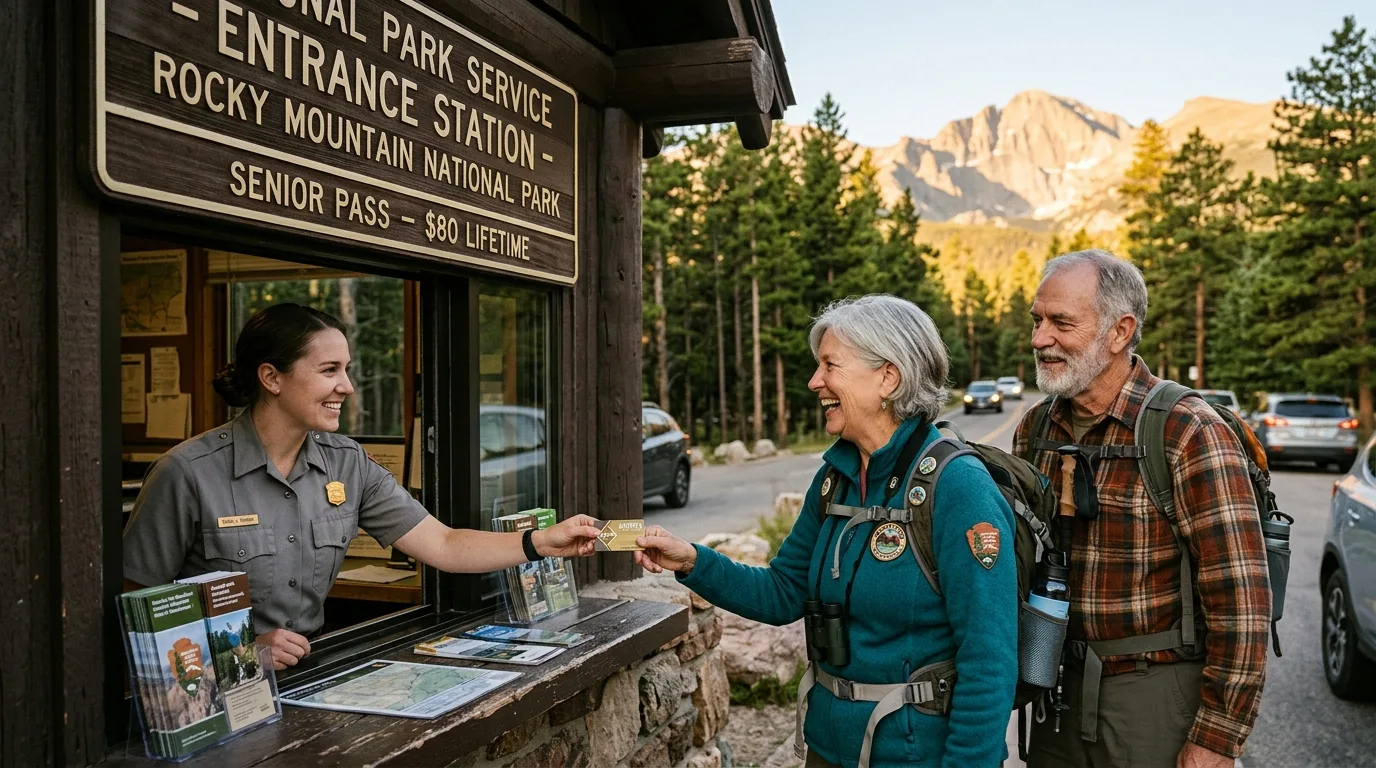
At 62, not 65, you can buy the America the Beautiful Senior Pass: $20 for a year or $80 for life, sold at park entrances and on the official USGS store. It admits you plus everyone in your vehicle to 2,000+ federal recreation sites, and cuts many federal campsite fees in half.
Do the math on one road trip: 4 parks at roughly $35 per carload is $140. The lifetime pass pays for itself before your first vacation ends, which is why it tops every honest list of the best travel deals for seniors over 60. Full walkthrough, including the online ordering steps, in our national park senior pass guide. The National Park Service passes page lists every pass type if you’re under 62.
3. Trains: Amtrak’s 10%, plus a hidden 50% (65+, sometimes 62)
Amtrak gives travelers 65 and older 10% off most trains. No membership, no code, just proof of age. The part almost nobody knows: on the Downeaster line in New England, the senior discount jumps to 50% off and starts at 62. If you would rather ride than fly, we mapped the routes worth booking in our guide to the 9 stunning train trips for seniors in 2026.
Train travel suits senior travelers better than any other mode anyway: no TSA lines, big seats, luggage stays with you, and the view beats a middle seat every time. Of all the best travel deals for seniors over 60, this one asks the least of you: show ID, save 10%.
4. Hotels: senior rates hiding in the dropdown (55 to 62+)
Most major chains keep a senior rate in the “special rates” menu almost nobody opens:
- Marriott: 15% off at 62+, select “Senior Discount” when booking
- Best Western: 10-15% off at 55+ (or with AARP)
- Choice Hotels (Comfort Inn, Sleep Inn, Clarion, Cambria): up to 10% at 60+ with advance reservation, via the “Senior/AARP” rate option
- IHG (Holiday Inn, Candlewood): senior rates at 62+, amount varies by property
The catch: senior rates come off the flexible rate, so a sale price can still beat them. Check both, book direct, and ask at check-in anyway. The front desk can apply rates the website hides, and the question costs you 5 seconds of mild embarrassment at most. Hotel rates earn their spot among the best travel deals for seniors over 60 for one reason: they apply to every trip, not just the special ones.
5. Car rentals: the AARP stack (50+)
AARP membership ($15 the first year, open at age 50) unlocks published discounts of up to 30% at Avis, Budget, and Payless, plus a waived second-driver fee that often beats the discount itself. Hertz runs its own 50+ program on top. If 2 of you share the driving on 1 week-long rental, the membership pays for itself several times over.
6. Cruises: 55+ rates nobody posts
Cruise senior rates are the quietest of the best travel deals for seniors over 60. Carnival, Royal Caribbean, Celebrity, and Norwegian all run them (usually 55+) on select sailings, and they never appear on the homepage: ask your travel agent to check the senior qualifier, or call the line directly before booking. Pair the fare with a smart room choice using our guide to picking the best cabin on a cruise ship.
7. Local rides: half price by federal rule (65+)
Here’s a deal written into federal law that most travelers have never heard of: transit systems that receive federal funding must charge seniors 65+ no more than half fare during off-peak hours, per the Federal Transit Administration’s half-fare rule. Some cities go further: Philadelphia’s SEPTA lets seniors 65+ ride buses, trolleys, and the subway free with a Senior Key card.
On any city trip, check the local transit site for “senior fare” before you pay for taxis. It’s often the difference between $60 of ride-shares and $4 of subway.
8. Tours and buses: senior group rates from age 50
Group tours built for older travelers price themselves differently than the big booking sites. Road Scholar, the not-for-profit educational tour company, runs thousands of itineraries designed around travelers 50 and up, with lodging, meals, and guides bundled at one flat price. Grand Circle and Overseas Adventure Travel work the same way. The bundle usually beats what you’d pay assembling the same trip yourself, and solo travelers can often skip the dreaded single supplement on select departures. For a full breakdown of these operators and how they compare on price, group size, and pace, see my guide to the best senior tour companies for 2026.
On the budget end, Greyhound and FlixBus run occasional senior fares. Small savings, but city-to-city bus travel is already the cheapest seat in America, so any discount on top is gravy.
The deal nobody sells you: your own calendar
Here’s an honest secret: the best travel deal for seniors over 60 isn’t a senior rate at all. It’s flexibility. Retired travelers can fly the cheap Tuesday instead of the expensive Friday, cruise in late September instead of July, and visit national parks midweek in May when families can’t.
- Shoulder season (late April to May, September to mid-October): same destinations, 20-40% lower prices, smaller crowds, better weather than peak summer in most of the US.
- Midweek everything: Tuesday and Wednesday flights, Sunday-to-Thursday hotel stays, midweek cruise departures. The savings routinely beat any senior discount on this page.
- Stack it: a senior rate on top of a shoulder-season midweek booking is how a $2,000 trip becomes a $1,200 trip.
Working travelers would pay real money for that kind of schedule freedom. You already own it.
3 mistakes that cancel out the best travel deals for seniors over 60
- Booking the senior fare without comparing. Senior rates come off the highest published price. Roughly half the time, the public sale fare is lower. Check both every single time.
- Booking through third-party sites. Senior and AARP rates almost always require booking direct with the airline, hotel, or rental company. An Expedia booking usually locks you out of the discount and the front desk can’t fix it after.
- Never asking. The most expensive mistake on this list. Discounts at hotel desks, rental counters, and box offices sit unclaimed because the question feels awkward. It isn’t. The agent has heard it 400 times this month.
What age unlocks the best travel deals for seniors over 60?
The single biggest myth is that everything starts at 65. The truth is a staircase:
| Age | Travel deals that unlock |
|---|---|
| 50 | AARP membership: car rentals up to 30%, hotel and restaurant rates |
| 55 | Frontier 55FOR55, Best Western senior rate, most cruise senior rates |
| 60 | Choice Hotels senior rate, many tour operator discounts |
| 62 | $80 lifetime national park pass, Amtrak Downeaster 50%, Marriott and IHG senior rates |
| 65 | Airline senior fares (United, American, Delta), Amtrak 10%, federal half-fare transit |
How to stack the best travel deals for seniors over 60
- Senior rate vs sale rate: always compare. Senior discounts come off the highest published price. A Tuesday sale fare can beat a senior fare. Check both, take the lower one, feel no loyalty.
- Book direct, then ask again in person. Websites show some discounts; front desks and phone agents can apply more. “Do you have a senior or AARP rate?” works at every counter in America.
- Stack memberships on top of age. Age unlocks one discount tier, AARP often unlocks a better one, and both stack with loyalty points. The park pass stacks with everything because it’s not a discount, it’s a key.
And carry photo ID everywhere. Every deal on this list can ask for proof of age, and airlines can re-charge an unverified senior fare at full price.
Get the free Senior Flyer’s Rights & Perks Card: every discount, priority-boarding right, and assistance rule you’ve earned, on one printable card.
FAQ: senior travel deals in 2026
What is the single best travel deal for seniors over 60?
The America the Beautiful Senior Pass: $80 once, at age 62, for lifetime entry to 2,000+ national parks and federal sites for your whole vehicle. Nothing else on this list returns more money for less effort.
Do airlines still give senior discounts in 2026?
Yes, but never advertised. United and American hide a “Senior (65+)” option in their search forms, Delta sells senior fares by phone only, and Frontier’s 55FOR55 code starts at 55. Always compare against the regular fare first.
What age do senior travel discounts start?
Earlier than most people think. AARP travel discounts start at 50, Frontier and most cruise rates at 55, Choice Hotels at 60, the national park pass and Marriott at 62, and airline senior fares and Amtrak at 65.
Is AARP worth it just for travel deals?
Usually yes. At $15 for the first year, one car rental with the up-to-30% partner discount and a waived second-driver fee typically covers the membership several times over. It opens at age 50.
Are senior discounts always the cheapest option?
No. Senior rates usually come off the highest published price, so promotional sale fares can beat them. The winning habit: check the senior rate, check the sale rate, book the lower one.
Do I need to prove my age for senior travel deals?
Yes, carry photo ID with your date of birth. Hotels check at the desk, Amtrak checks on board, and airlines can re-charge an unverified senior fare at the full price.
- The $80 lifetime park pass at 62 is the best travel deal in America, full stop
- Airline senior fares live in dropdowns and phone lines, never on homepages
- The age staircase starts at 50 (AARP), not 65
- Senior rate vs sale rate: always compare, book the lower
- One question unlocks the rest: “Do you have a senior or AARP rate?”
This list is the map to the best travel deals for seniors over 60. For the deep guides, keep going with every airline’s senior discount, the national park senior pass walkthrough, 10 surprising discounts for seniors, and the 7 hidden airport perks seniors miss.
Affiliate disclosure: this page contains affiliate links. If you book through them we may earn a small commission at no extra cost to you. It keeps our guides free. Deal terms verified July 2026 against each company’s published policy; policies can change, so confirm before booking.