Table of Contents
TSA medication rules are simpler than most travelers fear and stricter than most travelers guess. Pills fly free in any container, liquid medicine breaks the famous 3-1-1 rule legally, and insulin, needles, and CPAP machines all have their own lane. Here’s every rule for flying with medication, straight from TSA’s own pages, with the senior-specific parts nobody covers.
Updated July 2026 · Checked against TSA.gov’s medication and medical screening pages · By the Passport Pro Travel team, trusted by 100,000+ senior travelers
The short answer: TSA medication rules allow unlimited pills in carry-on bags, in any container, no prescription label required by TSA. Liquid medication over 3.4 oz is allowed in “reasonable quantities” but must be declared to the officer. Insulin, needles, ice packs, and CPAP machines are all permitted. Always pack medication in your carry-on, never in checked luggage.
TSA medication rules for pills: easier than you think
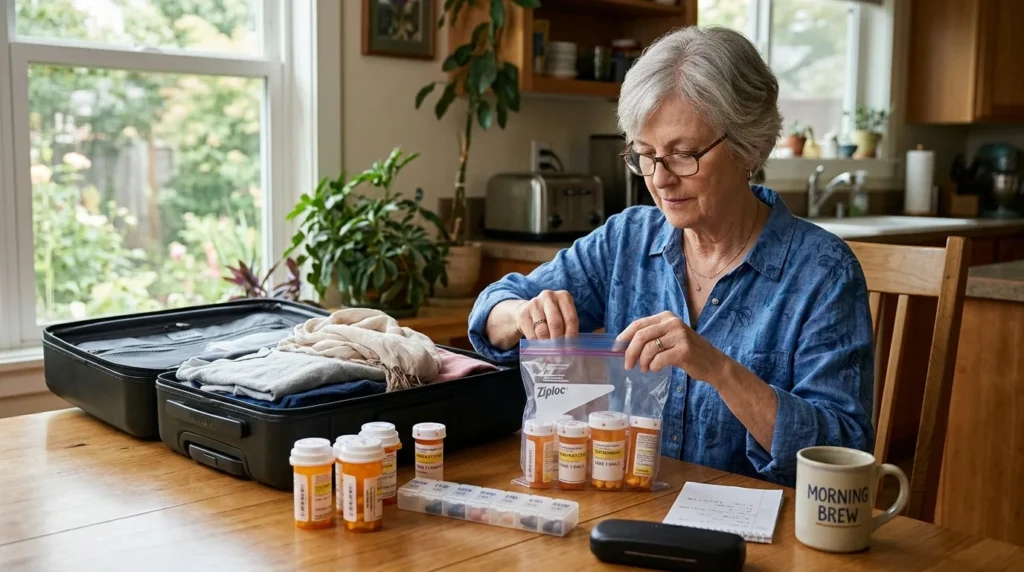
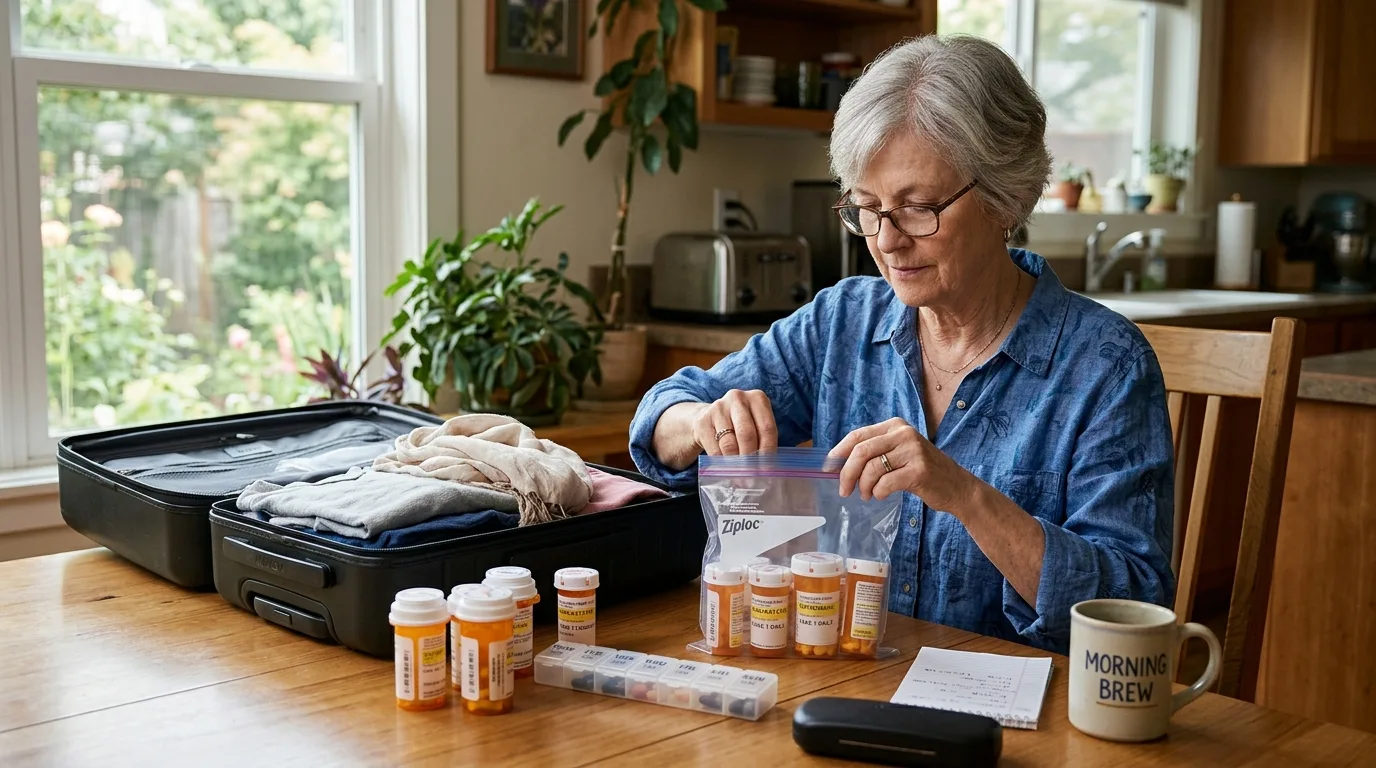
Solid medications (tablets, capsules, vitamins) have no quantity limit and no container rule at the federal level. Your weekly pill organizer is fine. A zip bag of assorted tablets is fine. TSA screens medication by X-ray like everything else, and you can ask for a hand inspection instead if you’d rather your pills skip the machine.
Two smart habits when flying with medication anyway: keep at least the pharmacy label for anything controlled (a few states and every international border care much more than TSA does), and split important medication between your bag and your travel partner’s, in case one bag wanders off to a different city. Bags do that. Usually the one with the blood pressure pills.
Liquid medication: the legal way around 3-1-1
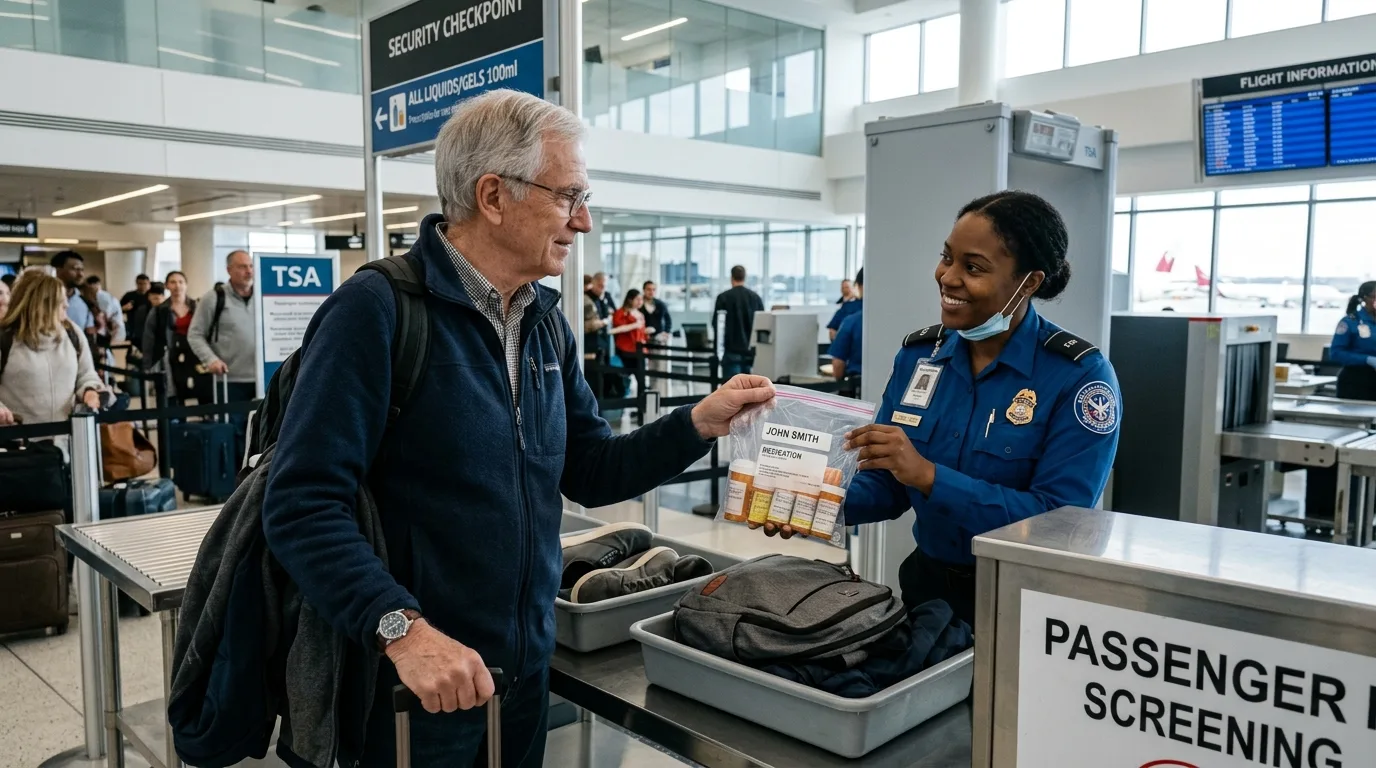
The 3.4 oz liquid limit that rules everyone’s shampoo does not rule your medicine. TSA’s own liquid medications page says it plainly: medically necessary liquids, gels, and aerosols are allowed in “reasonable quantities for your trip,” and they don’t need to fit in the quart bag.
- Declare it. This is the step people miss. Take the liquid medication out and tell the officer “I have medically necessary liquids” at the start of screening. Undeclared oversized liquids are how medicine ends up in the checkpoint bin.
- Expect extra screening. The bottle may get its own X-ray pass or a vapor test. Normal, quick, and you can refuse to have it opened if that would break a seal: ask for alternate screening instead.
- Ice packs and gel packs are allowed to keep medication cool, even partially melted, when they accompany the medicine.
Insulin, needles, and injectables
Diabetes supplies are fully permitted in carry-on: insulin in any form, syringes, pens, pumps, and glucose monitors. TSA’s medical page adds 2 conditions: syringes must be accompanied by the injectable medication, and insulin should be clearly identified (the pharmacy label on the box does the job). Wearing an insulin pump or glucose monitor? Tell the officer before screening starts; you won’t be asked to remove it.
Never put insulin in checked luggage. The cargo hold’s temperature swings can ruin it, and a delayed bag becomes a medical problem instead of a laundry problem.
CPAP machines and mobility devices
Your CPAP flies as a free medical device on top of your carry-on allowance with US airlines. At the checkpoint, take the machine out of its case for X-ray, like a laptop; the mask and tubing can stay packed. Bring distilled water for the humidifier? Over 3.4 oz it counts as a medically necessary liquid: declare it with the same script as above.
TSA medication rules for seniors: the 3 extras
- The TSA Notification Card. A free printable card that tells the officer about a medical condition or device discreetly, without announcing it to the line. Download it from TSA’s disabilities and medical conditions page, fill it in, and hand it over at the start.
- TSA Cares: 1-855-787-2227. Call at least 72 hours before flying and TSA can arrange help through screening, from medication questions to a passenger support specialist meeting you at the checkpoint. Free, weekdays 8 a.m. to 11 p.m. ET.
- 75+ gets lighter screening anyway. Travelers 75 and older can usually keep shoes and a light jacket on. Full details in our TSA rules for seniors over 75 guide.
Flying with medication abroad? TSA is the easy part
TSA medication rules only cover US checkpoints. Other countries regulate what enters, and some common US prescriptions (certain painkillers, ADHD medications, even strong cold medicine in Japan) are restricted abroad. Before an international trip: check the embassy website of your destination, carry medication in original labeled containers, and bring a doctor’s letter listing each prescription and why you take it. That letter costs nothing at your next appointment and answers every question any border officer has ever asked.
Get the free TSA Medication Checklist: what goes in the carry-on, the declare script, the doctor’s letter checklist, and the 72-hour TSA Cares steps, on one printable page.
FAQ: TSA medication rules
Do medications need to be in original bottles when flying?
Not for TSA. Federal rules set no container or labeling requirement, so pill organizers are fine for domestic flights. Keep original labels for controlled substances, for the few states with their own labeling laws, and always for international travel.
Can you bring pills on a plane in unlimited amounts?
Yes. TSA sets no quantity limit on solid medication in carry-on or checked bags. Carry what your trip needs plus a few extra days’ worth in case of delays, and keep it all in the carry-on.
How much liquid medication can I carry on?
More than 3.4 oz is fine in “reasonable quantities for your trip,” per TSA medication rules. It doesn’t need to fit the quart bag, but you must declare it to the officer at screening, and it may get extra checks.
Do I need a doctor’s note for medication at TSA?
No. TSA never requires a doctor’s note for medication. One is still smart for international borders, controlled prescriptions, and injectables, because it settles questions in seconds.
Should medication go in carry-on or checked luggage?
Carry-on, always. Checked bags get delayed, lost, frozen, and cooked. TSA allows medication in checked luggage, but your medicine should travel where you travel.
What medication mistakes get people stopped at security?
Undeclared oversized liquids, syringes packed without their medication, and loose controlled pills with no label. We break down all 5 big ones in our TSA medication mistakes guide.
- Pills: unlimited, any container, no label needed by TSA
- Liquid medicine: over 3.4 oz is legal, but declare it every time
- Insulin and needles: allowed; needles must travel with their medication
- CPAP: free extra item; out of the case at X-ray, distilled water = declared liquid
- Everything in the carry-on, never checked; abroad, add original bottles + doctor’s letter
- Need help? TSA Cares, 1-855-787-2227, at least 72 hours ahead
Flying soon? Keep going with our guides to the 5 TSA medication mistakes, TSA rules for seniors over 75, TSA liquid rules airlines hide, and the new TSA carry-on rules.
This guide is for general information, not medical advice. Rules summarized from TSA.gov, July 2026; screening decisions always rest with the officer on duty.