Table of Contents
Updated July 2026 · Checked against TSA.gov · By the Passport Pro Travel team, trusted by 100,000+ senior travelers · About us
Some links below are affiliate links. If you buy through them, we may earn a small commission at no extra cost to you. We only point you to gear we would pack ourselves.
The short answer: The new TSA carry-on rules for 2026 come down to three things. Liquids still follow the 3-1-1 rule (3.4 oz containers, one quart bag). Your power bank and spare batteries must ride in your carry-on, never in checked bags. And here is the one most travelers get wrong: TSA does not set the size or weight of your carry-on — your airline does. One more for 2026: you now need a REAL ID to fly. Everything else is detail, and we walk through it below.
Carry-on rules are the part of flying that changes just often enough to keep you guessing. Every year a new headline says TSA “cracked down” on something, and every year travelers show up unsure whether their bag is legal.
Most people believe TSA decides how big your carry-on can be and what it weighs. That belief is exactly what gets bags gate-checked and wallets $50 lighter. The truth splits the job in two, and once you see the split, the whole checkpoint gets simpler.
We checked every rule below against TSA.gov and the FAA in July 2026, so this is the current policy — not last year’s memory of it. Keep this line in your head all the way to the gate: TSA screens what’s inside the bag; your airline sizes the bag.
Here’s what we’ll cover: who really controls carry-on size, the 3-1-1 liquids rule in 2026, the battery rule that trips up half of all fliers, the powder rule almost nobody knows, the items TSA still confiscates most, and the new REAL ID requirement.
1. Carry-On Size and Weight: The Airline’s Call, Not TSA’s
Here’s where most travelers slip up. TSA sets no size or weight limit on your carry-on bag. TSA’s own FAQ says it plainly: “Size dimensions of carry-on baggage allowed in the cabin of the aircraft vary by airline. Contact your airline.” TSA’s job is what’s inside the bag. The bag’s dimensions are the airline’s rule, enforced at the gate.
Most major U.S. airlines cap the carry-on at roughly 22 x 14 x 9 inches (that includes wheels and handles), plus one personal item that fits under the seat. But the number moves by carrier — and the budget airlines are the strict ones. Always confirm with your airline before you fly, because the gate agent, not the TSA officer, is the one who measures.
| What it covers | TSA controls | Your airline controls |
|---|---|---|
| Carry-on size & weight | No | Yes |
| What items are allowed (liquids, batteries, sharps) | Yes | No |
| Number of carry-on bags | No | Yes |
| Personal-item size | No | Yes |
| Security screening & prohibited items | Yes | No |
Remember the line: TSA screens what’s inside the bag; your airline sizes the bag. Get that one split right and you’ll never be surprised at the gate again.
Two agencies split one suitcase between them, and only one of them shows up at the gate with a tape measure. Guess which rule is the one that costs you $50.
2. The 3-1-1 Liquids Rule (Still the Law in 2026)
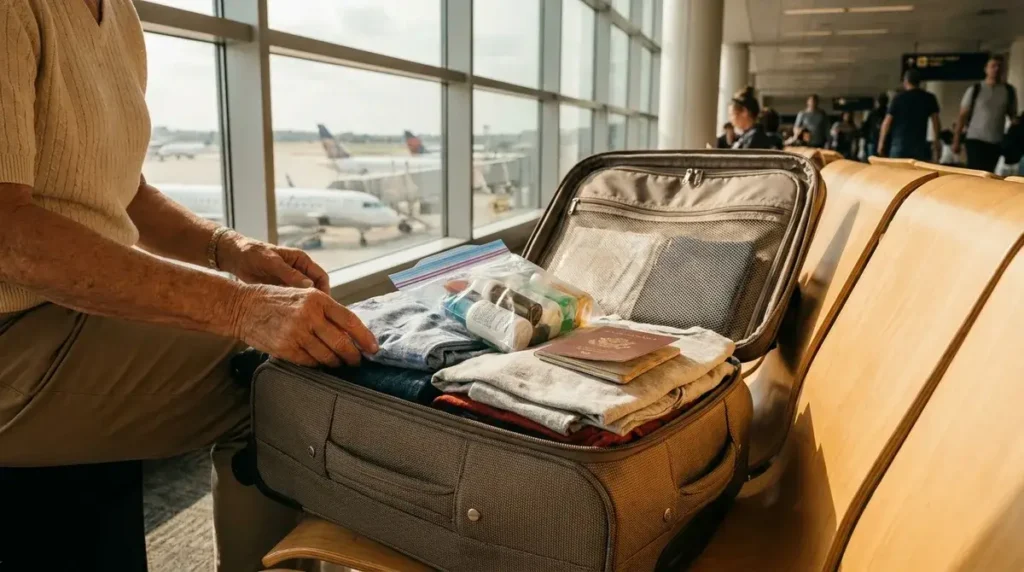
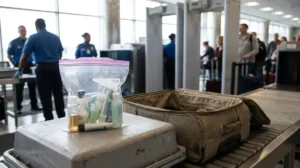
Liquids, gels, aerosols, creams, and pastes still follow the 3-1-1 rule. Per TSA.gov: each container holds 3.4 ounces (100 mL) or less, they all fit in one quart-size clear zip bag, and that’s one bag per passenger. Bigger containers go in your checked bag, even if they’re only half full — TSA goes by the container size printed on the bottle, not the amount inside.
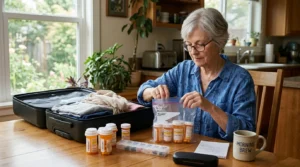
The big exception is medical: medically necessary liquids and medications are exempt from the 3.4-ounce limit. You can bring larger amounts — just declare them to the officer and keep them separate from your quart bag. That covers prescription liquids, saline, and the freezer packs that keep them cold.
Pro tip: The fastest way through the liquids lane is a bag that already meets the rule. A TSA-approved clear quart pouch like this BAGSMART set pulls out of your carry-on in one motion — no digging, no baggie splitting open on the belt. For the full breakdown of what fits, see our guide to the TSA liquid rules.
3. Batteries and Power Banks: They Must Ride in the Cabin
This one sends bags back off the plane, so it matters. Power banks and spare lithium batteries must go in your carry-on, never in a checked bag. TSA and the FAA are clear: “Portable chargers or power banks containing a lithium ion battery must be packed in carry-on bags,” and spare lithium batteries are “prohibited in checked luggage.”
The reason is fire safety — a battery that overheats in the cabin can be dealt with, but one in the cargo hold cannot. So your phone charger brick, your laptop’s loose spare battery, and any power bank ride with you in the seat. Devices with the battery installed (your phone, laptop, camera) are fine in either bag, but carry-on is still safest.
4. The Powder Rule Almost Nobody Knows
Here’s a quiet one that catches travelers off guard at the checkpoint. Powder-like substances of 12 ounces (350 mL) or more may need extra screening, and the officer can ask you to open the container. Think protein powder, ground coffee, powdered supplements, even bulk spices or a large bag of powdered creamer.
You can still bring them — nothing here is banned — but a large tub of powder can slow your lane down. If you’re carrying more than about 12 ounces, put it in a spot you can reach, or move it to your checked bag to keep your line moving.
5. Top Carry-On Items TSA Still Confiscates
Most confiscations aren’t exotic — they’re everyday items in the wrong bag. Here’s how this usually goes: the bag gets pulled, the officer holds up the item, and you’re choosing between the trash can and missing boarding. The usual suspects:
- Oversized liquids — the sunscreen, the full-size shampoo, the “it’s almost empty” bottle. Over 3.4 oz, it’s gone.
- Sharp objects — pocket knives, scissors over 4 inches, razor blades (a razor with the blade enclosed is fine).
- That water bottle you forgot to empty — empty is fine, full gets flagged. Empty it before the line, fill it after.
- Snow globes and gels — a snow globe bigger than a tennis ball is over the liquid limit.
- Certain tools — anything over 7 inches, like a wrench or pliers.
None of it is sinister — it’s just that your half-used sunscreen has finally met a bureaucracy that outranks it. A two-minute check the night before spares you the goodbye.
Pro tip: The single best habit is a two-minute bag sweep the night before — call it the Night-Before Check. Pull anything liquid, sharp, or over 3.4 oz and decide: quart bag, checked bag, or leave it home. Our free TSA Carry-On & Medication Checklist is a one-page version you can run down before every trip.
Worth knowing: TSA can confiscate your favorite multitool, but a cancelled trip costs far more than anything in your bag. Before your next booking, see the best travel insurance for seniors — cancellations, delays, and lost luggage, covered.
6. New for 2026: You Now Need a REAL ID to Fly
This isn’t a carry-on rule, but it’s the one that will actually stop you at the checkpoint, so it belongs here. As of May 7, 2025, every adult flying within the U.S. needs a REAL ID-compliant license or another accepted ID (like a valid passport). A standard license without the star in the corner is no longer enough on its own.
Check the top corner of your driver’s license for a star. No star means you’ll want to sort this out before your next flight — a passport also works as a backup. We break down every accepted ID and how to upgrade in our REAL ID guide. If you’re 75 or older, the screening itself is gentler too — see our guide to TSA rules for seniors over 75.
Pro tip: Getting your packing dialed in pays off on every trip. Our free senior travel guides and the road-tested gear on our Amazon storefront cover the small stuff that makes a carry-on trip smoother — from quart pouches to compression socks.
Your Pre-Airport Carry-On Checklist
- Confirm your airline’s carry-on size — not TSA’s, the airline’s. Budget carriers are strictest.
- Pack liquids in one quart bag, 3.4 oz each. Medications separate and declared.
- Power banks and spare batteries in the carry-on — never checked.
- Large powders (12 oz+) where you can reach them, or check them.
- Star on your license? If not, bring your passport — REAL ID is required now.
Run that list and the checkpoint becomes routine. And while you’re planning the trip, it’s worth checking the airline senior discounts you may be owed on the fare itself.

From the Passport Pro team
Want the complete flying system, not just one article?
The Confident Flyer’s Playbook: TSA walkthrough, senior-discount directory, packing systems and checkpoint scripts — built for travelers over 60.
See what’s inside — $27Frequently Asked Questions
What are the new TSA carry-on rules for 2026?
The core 2026 rules: liquids follow the 3-1-1 rule (3.4 oz containers, one quart bag), power banks and spare batteries must be in your carry-on rather than checked, and powders over 12 ounces may get extra screening. TSA sets what you can bring; your airline sets the bag’s size and weight. A REAL ID is now required to fly.
What size carry-on does TSA allow?
TSA does not set a carry-on size limit — the airline does. Per TSA.gov, carry-on dimensions vary by airline, so you contact your carrier. Most major U.S. airlines cap it around 22 x 14 x 9 inches including wheels and handles, but budget airlines are stricter, so always confirm before you fly.
Can I bring a power bank in my carry-on?
Yes — and you must. TSA and the FAA require power banks and spare lithium batteries to travel in your carry-on bag, not your checked luggage, for fire safety. Keep them with you in the cabin. Devices with the battery installed, like a phone or laptop, can go in either bag.
How many liquids can I bring in a carry-on?
Under the 3-1-1 rule, each liquid container must be 3.4 ounces (100 mL) or less, all fitting in one quart-size clear bag, one bag per passenger. Medically necessary liquids and medications are exempt from the size limit — bring larger amounts, but declare them to the officer.
Do I need a REAL ID for domestic flights in 2026?
Yes. Since May 7, 2025, adults flying within the U.S. need a REAL ID-compliant license (marked with a star) or another accepted ID such as a valid passport. A standard license without the star is no longer accepted on its own at the checkpoint.
The takeaway: Carry-on rules aren’t complicated once you know who controls what.
- Size & weight = your airline. Contents = TSA.
- 3-1-1 liquids still stand; meds are exempt.
- Power banks and spare batteries ride in the cabin, never checked.
- Powders 12 oz+ may get a second look.
- REAL ID (or a passport) is required to fly now.
TSA screens what’s inside the bag; your airline sizes the bag.
Keep planning your trip: TSA liquid rules explained · TSA rules for seniors over 75 · 12 essential packing tips · Free senior travel guides · watch more at Passport Pro on YouTube.


Great article! It’s super helpful to have all these updated TSA rules in one place. I was wondering if you could clarify something regarding medications. You mentioned that medications are allowed but should be clearly labeled. What about medications that require refrigeration, like insulin or certain biologics? I’m specifically thinking about how to navigate security with cooling packs and proving they are medically necessary.
Do you have any additional tips or recent experiences with getting these items through security smoothly? Thanks for the insightful post!
Hi Jared! Good question. Medications are NOT subject to the 3.4 oz liquid rule — you can bring as much as you need in any size container. Just keep them separate from your 3-1-1 bag and declare them to the TSA officer. Bring the original prescription label if possible (especially for controlled substances). For international flights, also pack a doctor’s note listing your meds — some countries restrict certain prescriptions. Hope this clears it up!
Great article! These updates are really helpful for staying prepared. I especially appreciated the section about medications and TSA rules. It got me thinking about a specific scenario: what about liquid medications that are over 3.4 ounces? The article mentions they are allowed if declared, but I’m curious about the practicalities of packing them. For instance, is it better to put a larger, necessary liquid medication in a carry-on versus checked luggage, especially considering potential temperature fluctuations in the hold? What has been your experience or advice on this? Thanks for the insightful post!
Thanks Nicole! For liquid medications over 3.4 oz: declare them at the checkpoint, place in a separate bin from your 3-1-1 bag, and bring your prescription label or doctor’s note. TSA may swab the bottle for explosives but won’t ask you to open or taste it. You can also bring frozen ice packs to keep refrigerated meds cold — those don’t count toward your liquid limit either. Hope this helps!