
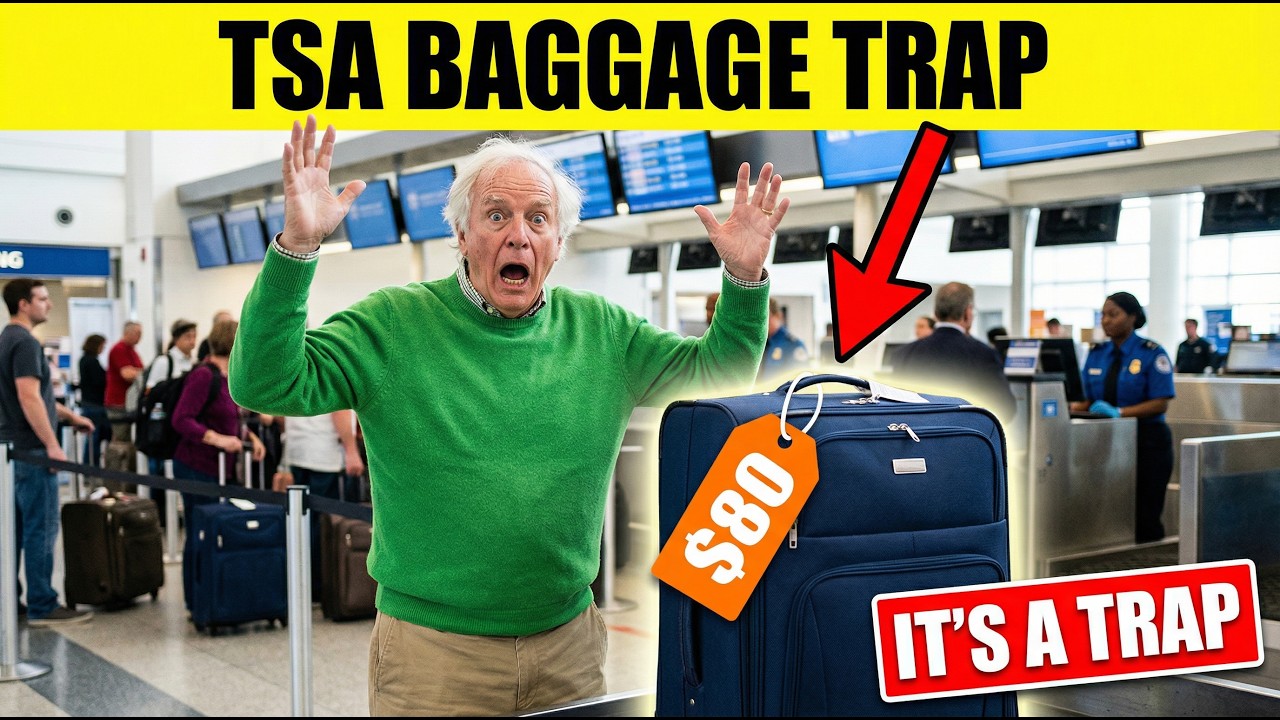
Ever step up to the check-in counter and feel a sudden drop in your stomach when the agent asks to weigh your bag? You carefully packed your Hard-Shell Suitcase, measured the dimensions, but suddenly you are hit with an unexpected $75 fee. You are not alone in this frustration. There is a very specific, profit-driven reason why baggage fees 2026 have exploded recently, and it involves deep shifts in airline revenue models, new governmental regulations, and advanced predictive algorithms designed to squeeze every last cent out of your ticket.
As expert travel creators and industry insiders, we are peeling back the curtain to reveal exactly how to avoid baggage fees 2026 and the specific, calculated tactics carriers hope you never discover. Knowing these insights can transform you from a passive, frustrated passenger into a savvy, confident traveler. For more insights on avoiding airport mistakes, check out our highly-rated guide on 5 TSA Medication Mistakes That Could Ruin Your Trip.
Unmasking Why Baggage Fees 2026 Are Surging
In recent years, the cost of flying has fundamentally shifted. Rather than increasing base fares, which would scare away consumers browsing travel aggregators, the aviation industry has completely unbundled the traditional ticket. By understanding how to avoid baggage fees 2026, you can protect your wallet and travel smoothly.
1. The “Basic Economy” Unbundling Strategy
Airlines realized years ago that appearing at the top of search results on platforms like Google Flights was the only way to win customers. To do this, they created “Basic Economy” tickets. But to make up for the lost revenue, they unbundled the ticket. Your seat is cheap, but bringing clothes will cost you. According to the FAA, operational costs have also impacted these fee structures, giving airlines the perfect excuse to charge for previously complimentary services like overhead bin space. To keep your luggage safe during these chaotic boarding processes, we highly recommend securing your bag with TSA-Approved Locks.
2. The Gate-Check Algorithm
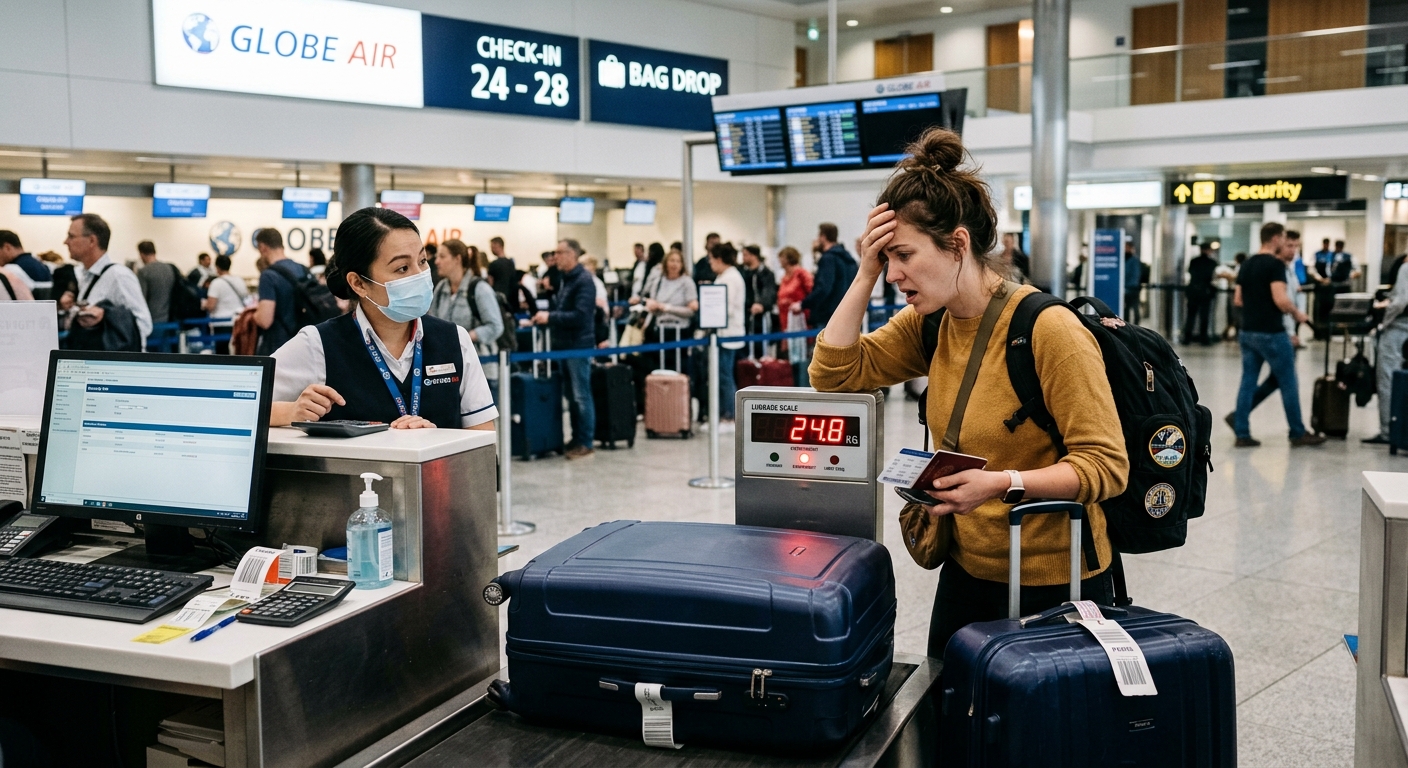
Have you ever noticed flights always seem “completely full” and the gate agents urgently ask for volunteers to gate-check bags? This is rarely an accident. Airlines use advanced predictive algorithms to determine exactly how many basic economy passengers are on board a specific flight. They purposely limit overhead bin space on newer aircraft configurations to force last-minute gate checks. If you are forced to check your bag unexpectedly, make sure you can track its location instantly by tossing an Apple AirTag Tracker inside before you hand it over.
3. Dynamic Pricing for Luggage
Just like your ticket price fluctuates wildly based on demand, baggage fees have officially become dynamic. If you wait until you are standing at the airport counter to pay for your bag, the airline’s system detects high demand and desperation, surging the price by up to 50%. Paying during the initial booking phase is the only guaranteed way to lock in the lowest baggage tier. We also discussed similar dynamic pricing traps in our recent article about Flying After 60? Unlock 7 Hidden Airport Perks Seniors Miss!.
4. The Personal Item Dimension Shrink
Take a close, analytical look at the personal item sizer sitting at the gate. Over the last two years, several ultra-low-cost airlines have quietly shaved an inch off the allowable dimensions. That trusty backpack that used to slide perfectly under the seat in front of you? It might now protrude just enough for a strict gate agent to flag it. By investing in properly sized Packing Cubes & Organizers, you can compress your clothes and guarantee your bag fits every time to avoid baggage fees 2026.
5. Commission-Based Gate Agents
Here is a closely-guarded airline secret they absolutely do not want you to know: at several major ultra-low-cost carriers, gate agents receive a performance bonus or direct commission based on how many oversized or non-compliant bags they catch at the boarding door. They are financially incentivized to scrutinize your personal item closely. When the staff profits directly from your mistakes, the enforcement of rules becomes ruthless.
6. The Strict Weight Limit Illusion
While international flights have strictly weighed carry-ons for decades, domestic US flights are increasingly adopting this aggressive tactic. Your rolling bag might fit the dimension sizer perfectly, but if it weighs more than 15 lbs (or 7 kg), you will be immediately forced to check it. Always use a reliable digital luggage scale at home to avoid this expensive trap.
7. Seasonal Baggage Surges
Are you planning to fly during the winter holidays or the peak summer travel season? Carriers now boldly implement peak season baggage fees. A checked bag that costs $35 in the off-season of February might suddenly cost $45 or even $50 in mid-July. Always meticulously check the fine print on the airline’s baggage calculator before booking a seemingly “cheap” summer fare.
8. The Co-Branded Credit Card Trap
Airlines push their co-branded credit cards relentlessly in-flight, offering “free checked bags” as the primary, irresistible perk. However, the annual fees on these cards have steadily increased over the years. They know that the average leisure traveler only flies 1.5 times a year. If you pay a $99 annual fee but only check one bag round-trip, the airline actually made far more money off your card fee than the baggage fee itself. It is a brilliant, hidden revenue stream tied to baggage fees 2026.
9. The “Zone Boarding” Anxiety Tactic
Airlines board Basic Economy passengers absolutely last for a very specific reason. By the time Zone 6 or 7 boards, the overhead bins are intentionally completely full. They rely on the mounting anxiety of watching other passengers board to push you into paying for priority boarding on future flights—which essentially is just a hidden baggage fee so you can secure overhead bin space before it runs out. Want to know more about boarding secrets? Read our guide on Airline Theft Prevention: Never Put Your Bag Here in 2025!.
10. The Long Security Checkpoint Squeeze
While the TSA itself doesn’t charge for bags, airlines work closely with airport design and architectural teams. The physical distance from the security checkpoint to the farthest gates has dramatically increased in modern, sprawling terminals. Airlines know that lugging a heavy carry-on for 20 minutes through a massive terminal exhausts passengers, making them much more likely to simply surrender and check a bag on their exhausting return flight. This makes wearing Compression Socks for Travel an absolute lifesaver when navigating these endless terminals.
Final Thoughts on Avoiding Luggage Traps
The golden era of traveling with everything but the kitchen sink without incurring massive fees is officially over. The harsh reality is that airlines have built an incredible, multi-billion-dollar revenue engine entirely off your luggage and your lack of preparation. By deeply understanding baggage fees 2026, you can proactively pack smarter, invest in perfectly sized minimalist travel gear, and keep your hard-earned money out of the airlines’ deep pockets. Remember to always weigh your bags, obsessively check the latest dimension rules, and be prepared before every single flight!