Table of Contents
Updated July 2026 · Insights cross-checked against TSA rules and baggage-handler practice · By the Passport Pro Travel team, trusted by 100,000+ senior travelers
The short answer: a hard-shell spinner with four wheels and zero dangling straps, old tags stripped off, a TSA-approved lock, valuables and medications in your carry-on, and every liquid double-bagged. Those six moves prevent most lost, damaged, and soaked luggage before you leave the house.
You’ve packed your bags, checked in online, and you’re ready for your flight. But what happens once your checked luggage disappears behind the counter? Most travelers assume it’s a straightforward journey to the plane, but the reality is far more complex. In 2026, with faster operations and evolving rules, one small packing mistake can send your bag on an unexpected detour or spill its contents in the cargo hold. Airlines rarely reveal the behind-the-scenes challenges of baggage handling, leaving many travelers vulnerable to preventable mishaps.
We’ve spent years decoding airline rules for travelers over 60, and these packing and luggage tips come straight from the people who know your suitcase best: baggage handlers and industry professionals. By understanding what truly happens once your suitcase leaves your hands, you can transform your next flight experience from stressful to remarkably smooth. Get ready to dive into the essential advice that will help you protect your belongings, navigate airport procedures, and ensure your luggage arrives safely at your destination. Let’s make sure your travel in 2026 is as seamless as possible.
Choosing the Right Essential Packing Luggage: Beyond the Aesthetic
The type of luggage you choose plays a far more critical role in its journey through the airport system than most people realize. It’s not just about durability; it’s about how your bag interacts with the intricate network of conveyor belts and handling equipment. Selecting the right suitcase can dramatically reduce the risk of delays, damage, or even loss.
Tip 1: Avoid Soft Bags with Dangling Parts
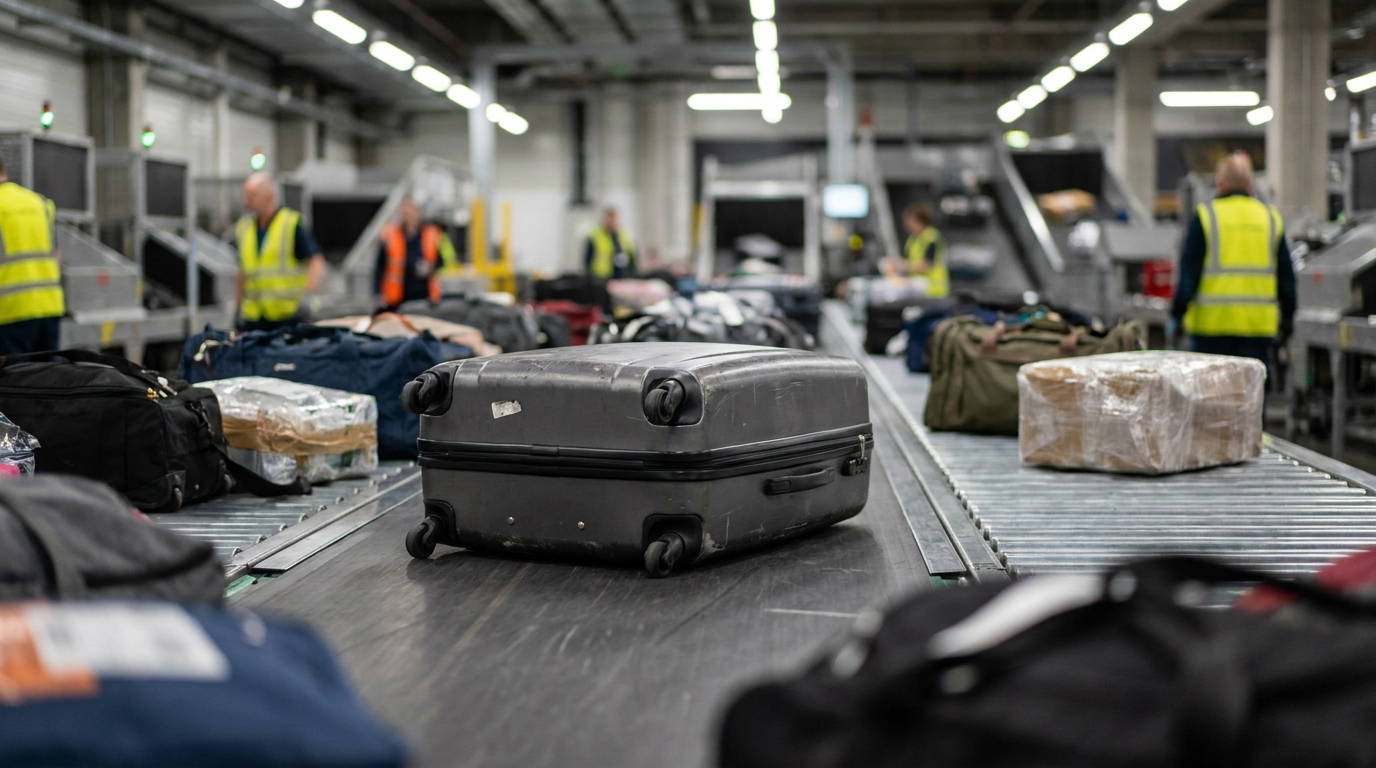
While that soft duffel bag might seem convenient for its numerous pockets and flexible structure, it’s a significant liability on airport conveyor belts. Checked luggage endures a gauntlet of slamming, shoving, and squeezing through automated systems that show no mercy to loose elements. Straps can easily catch on mechanisms, and zippers can jam in tight spaces. When this happens, your bag gets pulled for manual inspection, causing delays, or worse, it gets left behind entirely. Baggage handlers can spot these “trouble bags” from a distance; anything with loose parts signals potential problems. A sturdy hard-shell suitcase, conversely, offers a smooth, snag-free exterior that glides through the system while protecting your belongings from impacts. Remember the handler’s rule: if it dangles, it snags.
Tip 2: Clear Your Luggage’s History: Remove All Old Tags
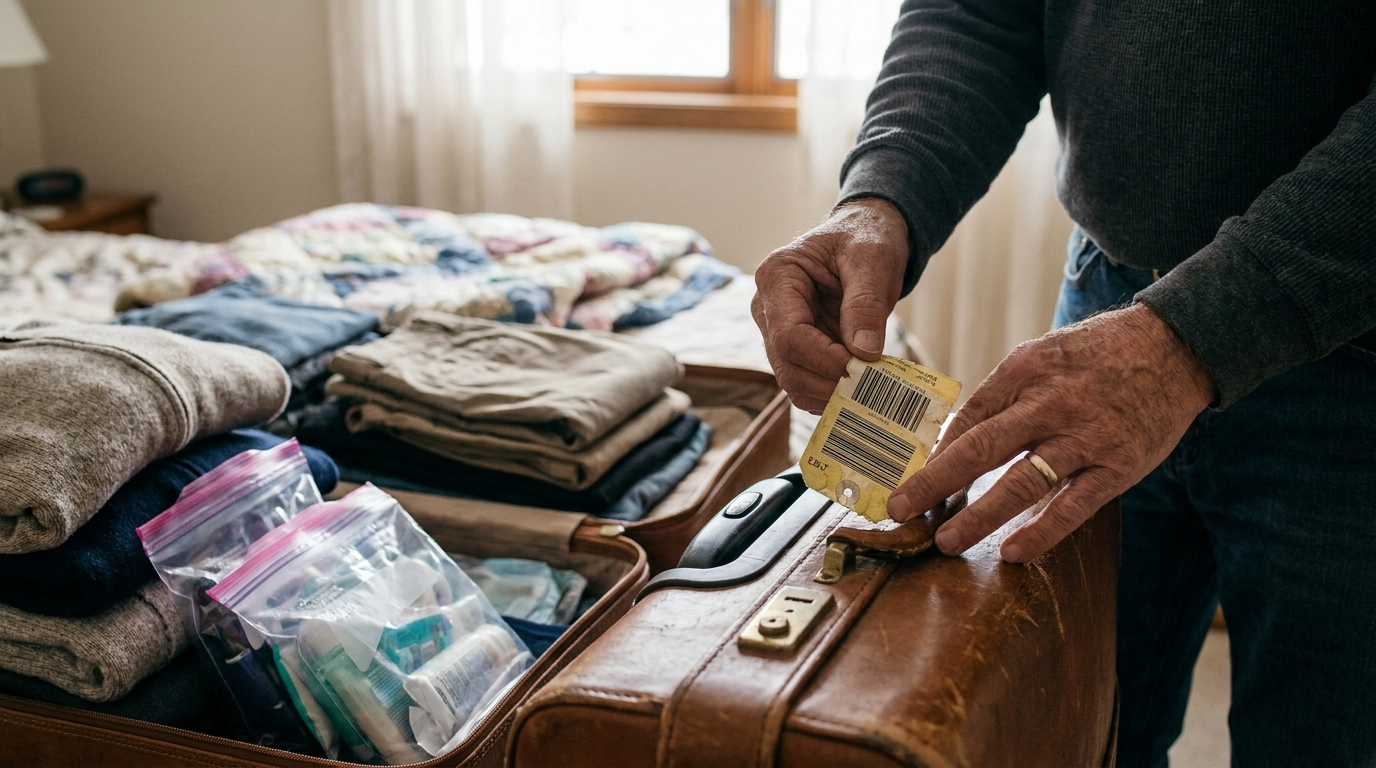
Every journey leaves a mark, but your suitcase should only tell the story of your current flight. A common and critical mistake travelers make is leaving old airline tags and baggage stickers on their luggage. What airlines won’t loudly advertise is that these faded relics from past trips can literally send your bag to the wrong destination. The scanners in the baggage system are designed to read barcodes quickly. If multiple barcodes are present, the system can pick up an incorrect one, leading to misrouting. Imagine your bag heading to Dallas when you’re flying to Denver! Before every trip, take a moment to strip every old barcode, tag, and sticker off your suitcase. Your bag should communicate one clear message: this flight, this destination.
Smart Identification & Security
Making your bag easily identifiable and securely locked are paramount steps to a stress-free baggage claim experience. However, there are nuances to both that many travelers overlook, often leading to more problems than solutions. Understanding the insider perspective on these aspects is key to smart travel.
Tip 3: Mark Your Bag Smartly, Ditch the Ribbons
After a long flight, the last thing anyone wants is to play a guessing game at baggage claim, staring at a sea of identical black suitcases. While colorful ribbons seem like a clever solution, baggage handlers will tell you they are a disaster waiting to happen. The loose ends of ribbons can easily get caught in conveyor systems, causing your bag to be pulled for manual handling or, worse, preventing it from making it out at all. Instead of a ribbon, opt for something flat and bold that hugs your suitcase. A strip of neon duct tape across the side, a distinctive luggage strap that wraps securely around the case, or even making a giant ‘X’ on both sides with electrical tape are highly effective. These methods provide instant recognition without the snagging risk. Same rule as the bag itself: if it dangles, it snags.
Tip 4: The Only Lock You Need: TSA-Approved
Feeling secure about your belongings is natural, but using just any lock on your checked bag can lead to its destruction. The TSA randomly checks approximately 5% of all checked bags. If your suitcase is locked with a non-approved lock, they will gain access one way or another. Airlines won’t explicitly warn you at check-in, but if your lock isn’t TSA-approved, agents will cut it off without warning, refund, or replacement. You’ll arrive at your destination with a broken zipper and a compromised suitcase. TSA-approved locks feature a universal keyhole that allows agents to unlock and relock your bag without damage. Look for the red diamond TSA logo on any lock you purchase, like these recommended TSA-Approved Locks. It’s your guarantee that security can access your bag without causing unnecessary destruction.
Safeguarding Your Valuables and Contents
Beyond the external appearance and security of your luggage, what you pack inside and how you pack it are critical for preventing loss and damage. These crucial Packing Luggage Tips address the internal vulnerabilities of your suitcase.
Tip 5: Document Your Contents: Pre-Packing Photos
No one anticipates losing their luggage, but if it happens, the airline’s first question will invariably be, “Can you describe exactly what was inside?” Most people struggle to recall precise details under pressure. Airlines often rely on your fuzzy memory to minimize payouts. Snapping a quick photo of your packed items before zipping your bag shut is one of the smartest moves you can make. Lay everything out clearly, take a clear shot, and you’re done. This photo becomes invaluable evidence for airlines, insurance companies, and your own memory, significantly speeding up potential claims and reducing disputes. Insurance companies especially appreciate photographic evidence as it removes guesswork, making the claim process much smoother.
Tip 6: Never Pack Valuables in Checked Luggage
This may seem obvious, yet countless travelers disregard this fundamental rule. Absolutely do not place cash, jewelry, expensive electronics, or important documents in your checked bag, regardless of how secure it feels. Over 2 million checked bags were delayed, lost, or mishandled at major US airports last year alone. Here’s the critical part: valuables inside are rarely covered in full by airline compensation. Most airlines have stringent reimbursement limits, and some won’t cover cash at all, capping payments far below the actual worth of your electronics. It’s not always about theft; bags can be rerouted, sit in storage rooms overnight, or locks can be broken during inspections. If an item truly matters to you, keep it in your carry-on, within your sight and reach. For more on protecting yourself, explore our Travel Warnings & Scams section.
Tip 7: Double Bag Liquids for Disaster Prevention
Imagine arriving at your destination to find your clothes soaked, your shoes ruined, and your electronics damaged by an exploded bottle of sunscreen or cologne. Cabin pressure changes during flight, and bags are tossed and turned, causing lids to pop off even seemingly secure containers. Even a single leaky bottle can wreak havoc on everything else you’ve packed. Baggage handlers routinely witness these “liquid explosions.” The cargo hold isn’t pressurized like the cabin, and temperature fluctuations cause containers to expand and burst. The pro tip here is simple yet effective: seal every liquid in zip-top bags (see the exact TSA liquid size limits). For high-risk items, double bag them. Use leak-proof travel bottles and position your liquids in the center of your suitcase, cushioned by clothes, far away from any sensitive electronics.
Navigating TSA and Airport Protocols
Understanding airport security protocols and making smart choices about your carry-on are essential for a smooth journey. These Packing Luggage Tips directly relate to avoiding unnecessary delays and ensuring you have what you need, even if your checked bag takes a detour.
Tip 8: Know Before You Go: Check TSA’s Banned Items List
While travelers often focus on carry-on restrictions, checked luggage has its own set of banned items that can lead to delays, flagging, or even confiscation. Airlines rarely inform you about these at check-in. Items like camping fuel, lithium batteries over certain sizes, or souvenir knives can trigger a full bag inspection and a “do not load” tag. Most people miss this crucial point: TSA doesn’t explain these rules at the airport; you are expected to know them before you pack. One banned item can result in your entire bag being left behind while you fly empty-handed. Always visit tsa.gov and use their “What Can I Bring?” tool for instant answers on carry-on, checked, or prohibited items. For international travel, always double-check that country’s customs rules as well. Learn more about general TSA & Airport Security to enhance your travel knowledge.
Tip 9: The Carry-On Lifeline: Always Pack a Change of Clothes
It’s an unfortunate reality that checked bags sometimes don’t arrive with you. They might be delayed, or worse, take an unexpected adventure to a different continent. Airlines don’t publicize how common this is, but baggage handlers and gate agents see it daily: passengers stuck in the same clothes for 24+ hours because everything went into checked luggage. Always pack at least one complete change of clothes—shirt, underwear, socks, and perhaps pajamas—in your carry-on bag. If traveling with children, split their essentials between multiple bags; if one bag goes missing, you won’t be completely stranded. This simple step turns a potential disaster into a minor inconvenience. For more packing strategies, refer to our comprehensive guide on Packing & Essentials.
Strategic Bag Handling & Tracking
Beyond what you pack, how you manage your checked bag’s journey through the airport can significantly impact its safe arrival. These final packing luggage tips offer strategic advice for minimizing risks and staying informed.
Tip 10: Timing is Everything: Don’t Check Your Bag Too Early
While arriving early at the airport is generally good advice, checking your bag too soon can actually increase its risk of being misplaced or mishandled. The sooner your bag goes behind the counter, the longer it sits unsupervised within the baggage system. More time equals more opportunities for it to get misplaced, opened by curious handlers, or even pulled off if weight adjustments are needed on the aircraft. Baggage workers often share that the first bags checked are typically loaded first but are also the first to be removed if necessary. Bags checked closer to departure, however, tend to stay in the active flow and are handled less overall. If time permits, aim to check your bag about 45 minutes before boarding. This minimizes the time your luggage is out of sight and reduces its chances of wandering off. Discover more Airline Hacks & Flight Tips to optimize your travel experience.
Tip 11: Outsmarting Airlines: Use GPS Tracking
Once your suitcase disappears behind the check-in desk, most travelers are flying blind, relying solely on the airline’s updates, which can often be vague or inaccurate. Smart travelers take control with personal GPS tracking. Slipping an Apple AirTag or Samsung SmartTag into your suitcase allows you to know its exact location, even when the airline is clueless. There are countless stories of travelers using these devices to pinpoint their lost luggage, often showing airline staff precisely where their bag was stuck, leading to its swift recovery. This simple piece of technology empowers you to track your baggage better than the airlines themselves, offering unparalleled peace of mind.
Tip 12: What Baggage Handlers Really Want You to Know
These final insights come straight from the people who physically handle your luggage, often in challenging conditions. They aren’t trying to damage your bags, but necessity dictates efficiency. If you want your bag to survive the journey, heed their unspoken advice:
- Get a four-wheeled bag, period. If it rolls smoothly, they can roll it gently. If it doesn’t roll well, it gets tossed – not out of spite, but because they have minutes to load hundreds of bags.
- Choose good fabric over cheap plastic. Quality bags with durable canvas exteriors, like those from TUMI, hold up far better to rough handling. Many cheap hard-shell cases crack after just a few trips.
- Stop shrink-wrapping your bags. Handlers despise this because the plastic often locks the wheels, making your suitcase impossible to roll. Instead of gliding gently, it must be dragged or tossed.
- Never bulge the front zipper pocket. These frequently catch on conveyor belts, leading to delays or damage.
- Never put keys or medications in checked bags. If your suitcase gets lost, you’re stuck without essentials. Keep these critical items on your person or in your carry-on.
These expert packing luggage tips from those on the front lines ensure your bag is handled with care and efficiency, benefiting all travelers, including seniors seeking smoother journeys.

From the Passport Pro team
Want the complete flying system, not just one article?
The Confident Flyer’s Playbook: TSA walkthrough, senior-discount directory, packing systems and checkpoint scripts — built for travelers over 60.
See what’s inside — $27Frequently Asked Questions About Checked Luggage
Q1: Why do airlines not warn us about these baggage handling issues?
Airlines prioritize efficiency and customer satisfaction metrics based on on-time departures. Disclosing the full complexities and risks of baggage handling could slow down check-in lines, increase customer complaints, and potentially deter travelers from checking bags, which is often a revenue stream. They prefer to handle issues as they arise rather than pre-emptively detail potential problems that might occur with a small percentage of bags.
Q2: How can I track my luggage if my airline doesn’t offer robust tracking?
While many major airlines now offer some form of in-app tracking, their systems can sometimes be delayed or inaccurate. The most reliable method is to use a personal GPS tracker like an Apple AirTag or Samsung SmartTag. Simply place one inside your checked bag before your flight. These devices connect to a vast network of other devices, allowing you to see your luggage’s real-time location on your smartphone, even if the airline’s system is lagging or has no information.
Q3: What should I do immediately if my checked bag is lost or delayed?
First, remain calm. Head directly to the airline’s baggage claim office, usually located near the baggage carousels. Provide them with your bag tag, flight information, and a detailed description of your luggage. If you took photos of your packed items (as per Tip 5), have those ready. Ask for a Property Irregularity Report (PIR) number, which is crucial for tracking and claims. Inquire about immediate needs, such as an allowance for essential items. Follow up regularly, and use your personal GPS tracker if you have one to provide the airline with its exact location.
Q4: Are there specific types of luggage that are universally preferred by baggage handlers?
Yes, baggage handlers strongly prefer hard-shell suitcases with four smooth, multi-directional wheels (spinner wheels). These bags are easy to roll and maneuver, reducing the need for handlers to lift or toss them. They also prefer bags without external straps, pockets, or excessive decorative elements that can snag on conveyor belts. Durability is key; a bag made of good fabric or sturdy polycarbonate will withstand the rigors of the baggage system much better than cheap, flimsy materials.
- If it dangles, it snags — hard shell, four wheels, no straps, no ribbons
- Strip every old tag — your bag should tell one story: this flight, this destination
- TSA-approved lock or no lock — anything else gets cut off
- Valuables, keys, and medications never leave your carry-on
- Photo of your packed bag before you zip it — your best friend in a claim
- Check bags ~45 minutes before boarding, and let an AirTag do the tracking
Conclusion: Master Your Checked Baggage for Seamless Journeys
Navigating the complexities of checked luggage doesn’t have to be a gamble. By incorporating these 12 essential packing luggage tips, you gain an invaluable advantage, transforming your travel experience from anxious to assured. From selecting the right suitcase and smart tagging to safeguarding your valuables and understanding airport protocols, each tip provides crucial insight that airlines often won’t share. Remember to prioritize hard-shell luggage, remove old tags, mark your bag smartly with flat identifiers, and always use TSA-approved locks. Document your packed items, never check valuables, and double-bag all liquids to prevent internal disasters. Stay informed about TSA rules, pack a change of clothes in your carry-on, and consider the timing of your bag check-in. Finally, embrace technology with GPS trackers and always remember the practical advice from the baggage handlers themselves. These airline secrets are your key to preventing lost luggage, avoiding airport theft, and enjoying truly seamless journeys in 2026 and beyond.
Which of these insider secrets surprised you the most? Share your thoughts and experiences in the comments below! Your real-world stories help other smart travelers. And for more expert insights and travel hacks, grab our free TSA Medication Checklist and explore our other guides, like “10 Packing Mistakes That Make TSA Hate You” to breeze through security. Safe travels!
For more on this, check out our guides to the TSA liquid rules airlines don’t spell out and what’s actually allowed in checked baggage.