Table of Contents
Updated July 2026 · Checked against TSA.gov and FAA.gov · By the Passport Pro Travel team, trusted by 100,000+ senior travelers
Short answer: Most everyday items are fine in a checked bag — but a handful will get it pulled, fined, or held. The biggest trap for travelers today isn’t a weapon or a firework: it’s the power bank. Spare lithium batteries and portable chargers are banned from checked bags and must ride in the cabin with you. Also barred from the hold: torch lighters, matches, fireworks and flammables, and any alcohol over 140 proof. Firearms are allowed only unloaded, in a locked hard case, and declared at the counter.
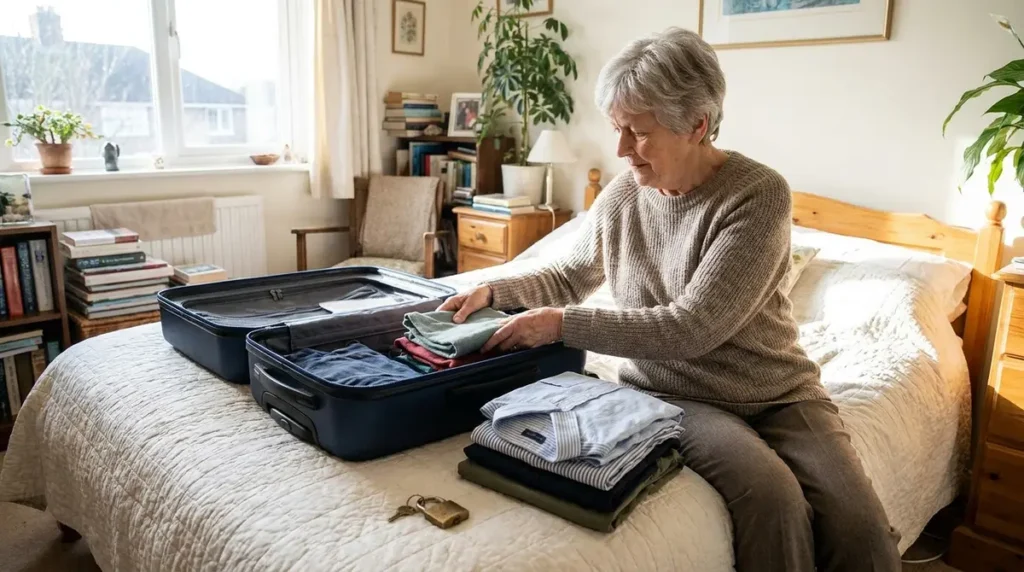
You did everything right. The bag is under the weight limit, the clothes are rolled tight, and you even remembered the charger. Then a gate agent asks you to open it — and the little power bank you tucked in the side pocket is the reason.
Most people assume the checked-bag rules are all about obvious dangers — guns, fireworks, the stuff of action movies. That’s the part everyone already knows. What actually strands ordinary travelers is the quiet list: batteries, lighters, sprays, and a few bottles that seem harmless until they’re sitting in an unheated, unpressurized cargo hold.
The rules aren’t random. Nearly every item on the banned list is there because the cargo hold can turn it into a fire or a leak at 35,000 feet. Learn the logic once and you’ll never guess again. Here’s how it usually goes, item by item, with the 2026 details the old lists get wrong.
1. Power Banks and Spare Batteries: The Rule That Catches Everyone
This is the single most common checked-bag mistake, and it has nothing to do with looking suspicious. Under FAA rules, spare lithium batteries and power banks are prohibited in checked baggage — they must be in your carry-on. That includes portable phone chargers, battery packs, and cell-phone charging cases. A loose lithium battery can overheat, and the cabin is where a crew can actually reach a problem; the sealed cargo hold is not.
The size limits, per the FAA’s battery guidance: batteries up to 100 watt-hours are fine in carry-on, 101–160 Wh need airline approval, and anything over 160 Wh is not allowed. Tape over the terminals or keep each battery in its own pouch so nothing shorts out. If your bag gets gate-checked, pull the power bank out and keep it with you.
For seniors, one reassurance: the small batteries inside hearing aids, CPAP machines, and medical devices are fine, and the devices themselves belong in your carry-on anyway. It’s the loose spares and the portable chargers that ride up top with you — never in the hold. If it sparks, sprays, or explodes, it doesn’t ride in the hold.
2. Lighters, Matches, and Fireworks: The Fire List
Anything that makes a flame is tightly controlled, and the rules flip what most people expect — several of these are allowed in the cabin but banned from checked bags:
- Lighters: One disposable or Zippo-style lighter is allowed in your carry-on or pocket — not in a checked bag. A checked bag can only hold a lighter with no fuel in it (or up to two fueled lighters in a special DOT-approved case). Torch lighters are banned everywhere, cabin and hold.
- Matches: One book of safety matches is a carry-on item only. All matches are prohibited in checked baggage, and strike-anywhere matches are banned entirely.
- Fireworks, sparklers, and flares: Banned from both carry-on and checked bags, no exceptions.
The takeaway from this section is simple: a flame source you carry in your pocket is legal, but the same item buried in a suitcase in the cargo hold is not. When you’re not sure, the cabin is the safer place for it — or leave it home.
3. Alcohol: The Three Tiers That Decide Everything
Bringing back a bottle of something? Alcohol is allowed in checked bags, but the proof on the label sets the rule. Per the TSA’s alcohol guidance, there are exactly three tiers:
| Alcohol by volume (ABV) | Checked bag rule | Example |
|---|---|---|
| 24% or less | No limit | Beer, most wine |
| Over 24% up to 70% (48–140 proof) | Up to 5 liters per person, unopened retail packaging | Whiskey, vodka, rum |
| Over 70% (over 140 proof) | Prohibited in checked AND carry-on | Grain alcohol, 151 rum |
That bottle of 151-proof rum in the third row isn’t so much confiscated as grounded for life — it’s staying home whether you like it or not.
Pro tip: A cracked bottle can soak an entire suitcase at altitude. Seal each one in a zip bag, nest it in the middle of your clothes, and lock the bag with a TSA-recognized luggage lock from our Amazon storefront so screeners can open and re-secure it without cutting it off.
4. Firearms and Ammunition: Declared, Unloaded, Locked
If you travel with a firearm, the rules are strict and non-negotiable — and getting them wrong is one of the fastest ways to earn a federal fine. Per the TSA’s firearms rules, a firearm may go only in checked baggage, and only when it is:
- Unloaded, and
- In a locked hard-sided container that can’t be pried open, with
- The firearm declared to the airline at the ticket counter when you check the bag.
Only you keep the key or combination. Ammunition is barred from carry-on but allowed in checked bags in its original box or a proper ammunition case, also declared. One warning that trips people up: the TSA treats a firearm as “loaded” if you can reach both the gun and the ammo — so keeping bullets in your pocket next to a checked case still counts. When in doubt, call your airline before you leave; their rules can add to the TSA’s.
Carry-On Only vs. Checked-OK vs. Banned: The Quick Map
| Carry-on only (never checked) | Checked bag is fine | Banned from both |
|---|---|---|
| Power banks & spare lithium batteries | Unloaded firearm in locked case (declared) | Fireworks, flares, sparklers |
| One lighter (fueled) or matches | Ammunition in proper box (declared) | Torch lighters |
| Medications & medical devices | Tools, most toiletries, alcohol ≤70% | Alcohol over 140 proof |
| Laptops, cameras, jewelry, documents | Dry ice (≤5.5 lb, vented, airline OK) | Strike-anywhere matches |
Table verified July 2026 against TSA “What Can I Bring” and FAA PackSafe. Writers and bloggers: you are welcome to reference this table — please credit it with a link to this page.
The Cargo-Hold Test: One Question Before You Zip the Bag
You don’t need to memorize every item. Use the framework we give every traveler — the Cargo-Hold Test. Before anything goes into a checked bag, ask one question: Can this spark, spray, leak, or explode? If the answer is yes, it either moves to your carry-on or stays home. Batteries spark, aerosols and torch lighters spray fire, bottles leak, fireworks explode — the test catches all of them.
Everything else — clothes, shoes, books, non-lithium gadgets, toiletries within the rules — rides safely below. Run the Cargo-Hold Test once per bag and the whole prohibited list collapses into a single habit. In all the years of packing, a folded sweater has never once caught fire in a cargo hold. If it sparks, sprays, or explodes, it doesn’t ride in the hold.
Senior-Smart Packing: What Should Never Leave Your Side
Checked bags get lost, delayed, and rifled through. For older travelers especially, a few things should always ride in your carry-on where you control them:
- Medications — a delayed bag can mean a missed dose. Keep prescriptions in the cabin, in their labeled bottles, with a day or two of extra supply.
- Medical devices and their batteries — CPAP machines, glucose monitors, hearing aids, and spare batteries all belong up top.
- Valuables and documents — passport, wallet, jewelry, laptop, and camera. The hold is no place for anything you can’t replace.
Pro tip: Liquids in a checked bag can still leak or freeze. Our free packing checklist lays out exactly what belongs in your carry-on versus the hold — and if you’re flying carry-on-only, pair it with our guide to the new TSA carry-on rules for 2026 so nothing gets pulled at the checkpoint.
The takeaway: Checked-bag rules come down to fire and leaks. Power banks and spare batteries ride in the cabin, never the hold. Lighters and matches stay in your pocket, not the suitcase. Alcohol over 140 proof and all fireworks are out entirely, and firearms fly only unloaded, locked, and declared. Run the Cargo-Hold Test on every bag — can it spark, spray, leak, or explode? — and you’ll never lose a thing to a confiscation bin.

From the Passport Pro team
Want the complete flying system, not just one article?
The Confident Flyer’s Playbook: TSA walkthrough, senior-discount directory, packing systems and checkpoint scripts — built for travelers over 60.
See what’s inside — $27One more layer of protection: even perfect packing can’t stop an airline from sending your suitcase to the wrong coast. Senior travel insurance reimburses lost bags, long delays, and cancelled trips — our 2026 comparison shows which plans are actually worth it.
Frequently Asked Questions
Can I put a power bank in my checked luggage?
No. Power banks and spare lithium batteries are prohibited in checked baggage and must be in your carry-on. Batteries up to 100 watt-hours are allowed; 101–160 Wh need airline approval; over 160 Wh are not allowed.
How much alcohol can I pack in a checked bag?
Alcohol at 24% ABV or less has no limit. Between 24% and 70% ABV, you can pack up to 5 liters per person in unopened retail packaging. Anything over 70% ABV (140 proof) is banned from both checked and carry-on bags.
Can I bring a lighter or matches in checked baggage?
Generally no. One fueled lighter and one book of safety matches are carry-on items only. Checked bags may hold a lighter only with no fuel (or up to two fueled lighters in a DOT-approved case). Torch lighters and strike-anywhere matches are banned everywhere.
How do I fly with a firearm in checked baggage?
A firearm must be unloaded, in a locked hard-sided container, and declared to the airline at the ticket counter. Only you keep the key. Ammunition is allowed in checked bags in a proper box and must also be declared.
Should I check my medications?
No. Keep medications and medical devices in your carry-on. A lost or delayed checked bag can mean missing critical doses, so carry a labeled supply plus a couple of extra days’ worth with you.
Is dry ice allowed in checked baggage?
Yes, up to 5.5 pounds (2.5 kg) per person, in packaging that lets the gas escape, and with your airline’s approval. Label the package so handlers know what’s inside.
Pack it right the first time.
Our free TSA Packing Checklist lays out exactly what rides in your carry-on, what’s fine in the hold, and what to leave home — so nothing gets pulled, fined, or confiscated.
Disclosure: some links above are affiliate links. If you buy through them, we may earn a small commission at no extra cost to you. We only recommend gear we’d hand our own parents.


Great article! These updated TSA rules are super helpful for planning future trips. One thing I’m still a bit unsure about—you mentioned that medications are better off in carry-on, which totally makes sense to avoid losing them. But what about larger liquid medications that exceed the usual 3-1-1 limits? I know there are exceptions for medical necessities, but I’ve always found the specifics a bit confusing, especially with international travel.
I’ve seen guides mention things like documentation, temperature-sensitive meds, and even how to handle controlled substances. Has anyone else used strategies like splitting meds between bags or using medical cooling kits for long flights? Would love to hear personal experiences or tips!
Hi Rachel! Great question. You’re correct that medications belong in carry-on, but the FAA does allow medically necessary items in checked bags if absolutely needed — just keep prescriptions in original labeled bottles. For peace of mind, always pack at least a 3-day supply in your carry-on in case your luggage gets delayed or lost. The TSA will also let you bring liquid medications over 3.4 oz, you just need to declare them at the checkpoint. Safe travels!
I’m bringing some gift items with me but can’t find any information regarding the suggested way to transport these things. The items in question are:
Rechargeable electric hand warmers with a 3000mAh(11.1)*2 battery
Toe Warmers – Ingredients Iron, Activated Charcoal, Water, Salt, Vermiculite
Can either of these items be packed in checked baggage or is it preferred they be in a carry-on bag?
Hi Marty! Rechargeable electric hand warmers with 3000mAh lithium-ion batteries: the TSA rule is they MUST go in carry-on, NEVER checked baggage. Lithium batteries in checked bags are a fire risk and prohibited by the FAA. The 3000mAh capacity is well under the 100 watt-hour limit so you’re fine — most airlines allow up to 2 spare batteries this size. Power them OFF and protect the terminals (original packaging or tape over them). Safe travels!